
Inside Teacher and Me: A Guided Tour, Screen by Screen

Winding practice path with milestone markers and a star — illustrated cover for “Inside Teacher and Me: A Guided Tour, Screen by Screen”

Screenshots beat promises. This is a walk through the product as it looks today — every image below is a real capture of the app, taken with demo data, exactly what you and your students would see.

What Teacher and Me is

Teacher and Me sits between your lessons, not inside them. It doesn't schedule sessions, take payments or run video calls. It does one job: turn the practice your students should be doing between sessions into something structured, motivating and — crucially — visible to you.

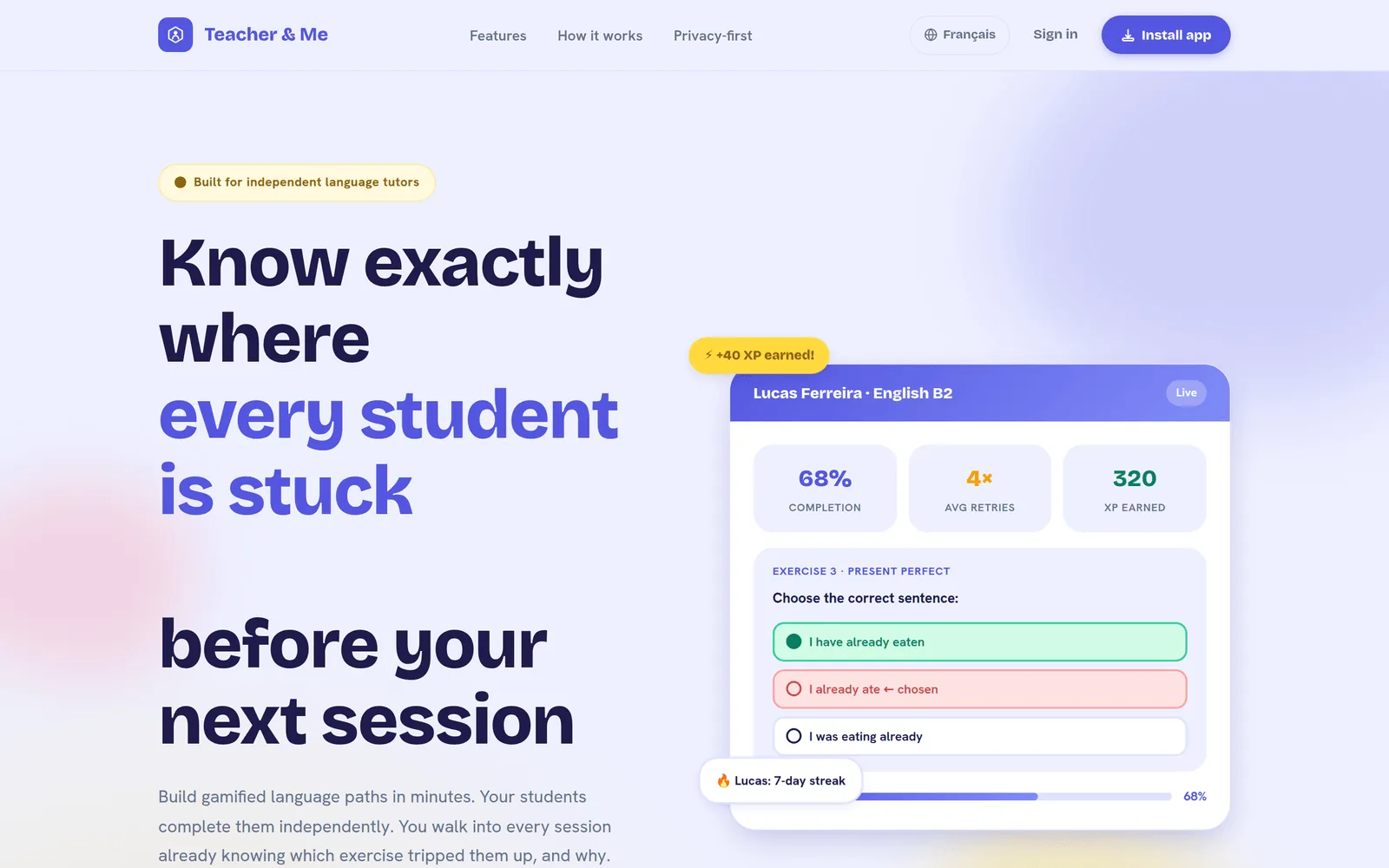
Teacher and Me landing page: 'Know exactly where every student is stuck before your next session', next to a live student card showing completion, retries and XP
The promise on the homepage: know exactly where every student is stuck, before your next session.

The product has two faces. Tutors get a calm, professional dashboard — closer to Linear or Notion than to a school LMS. Students get a warm, game-like experience with XP, streaks and a visual path to walk — closer to Duolingo, but powered by your content, not a generic course.

The tutor side: build a path in minutes

Everything you assign lives in a learning path: a sequence of lessons, each containing exercises. The dashboard lists your paths with tags, exercise counts and enrolled students at a glance.
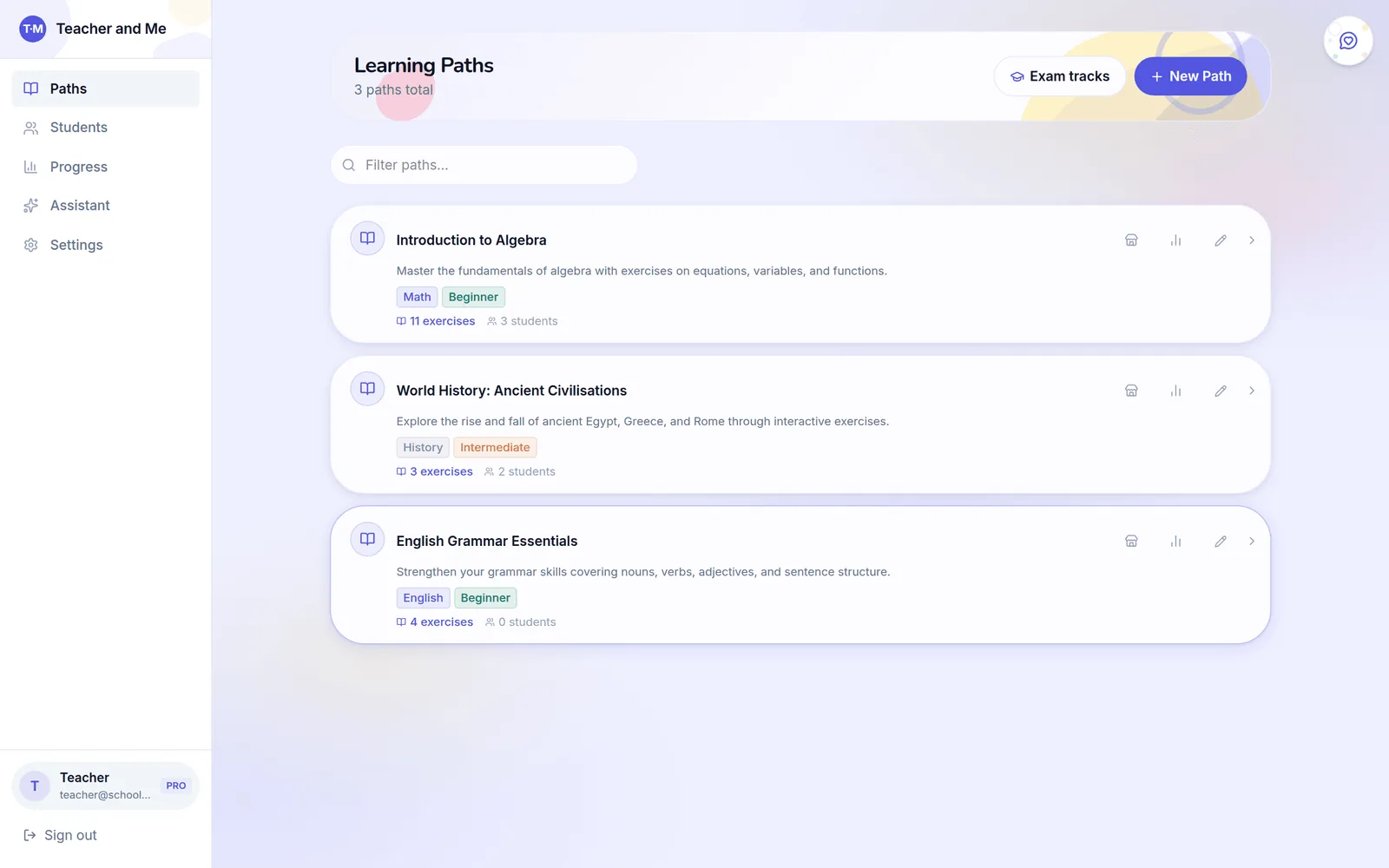
Teacher dashboard listing three learning paths with tags, exercise counts and student counts, plus an Exam tracks button and a New Path button
The teacher dashboard: your paths, their tags, and how many students are working through each.

The path editor is where the real work happens — and where Teacher and Me is fastest. Lessons stack vertically; exercises live inside them with their type and XP value visible. Inviting a student is one email field away, and the Preview as student button shows you exactly what they'll experience before you assign anything.
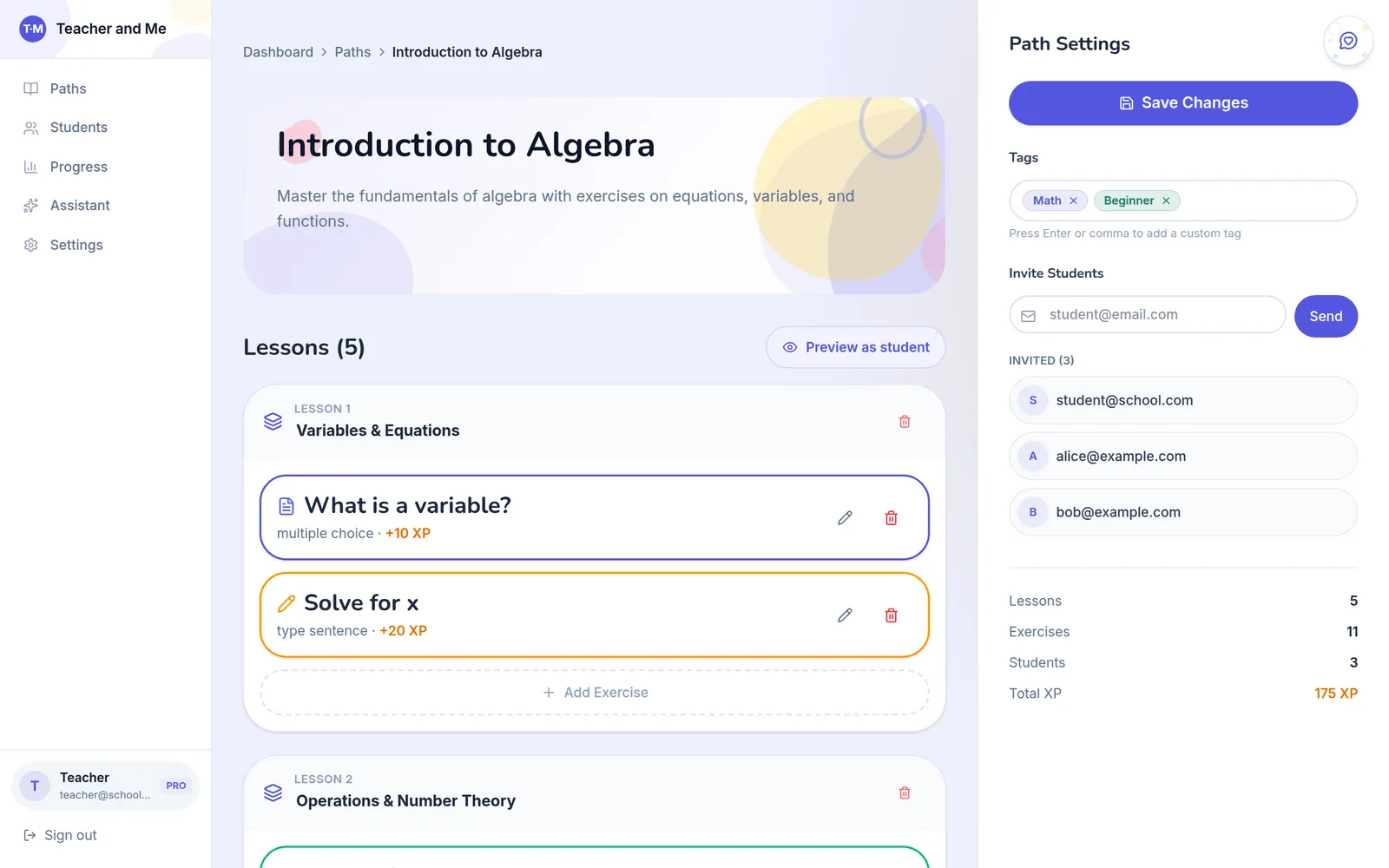
Path editor for 'Introduction to Algebra' showing lessons with exercises, XP per exercise, path settings, tags, student invitations and a Preview as student button
The path editor: lessons, exercises, XP weighting, tags and student invitations on one screen.

Creating an exercise is a single form. Pick one of seven exercise types — multiple choice, type-the-sentence, true/false, match-the-pairs, sentence reconstruction, fill-in-the-blank and pronunciation — write the question, mark the correct answer, and optionally add an explanation that students see after a wrong attempt. Each exercise carries its own XP reward (10/20/50), so harder exercises weigh more:
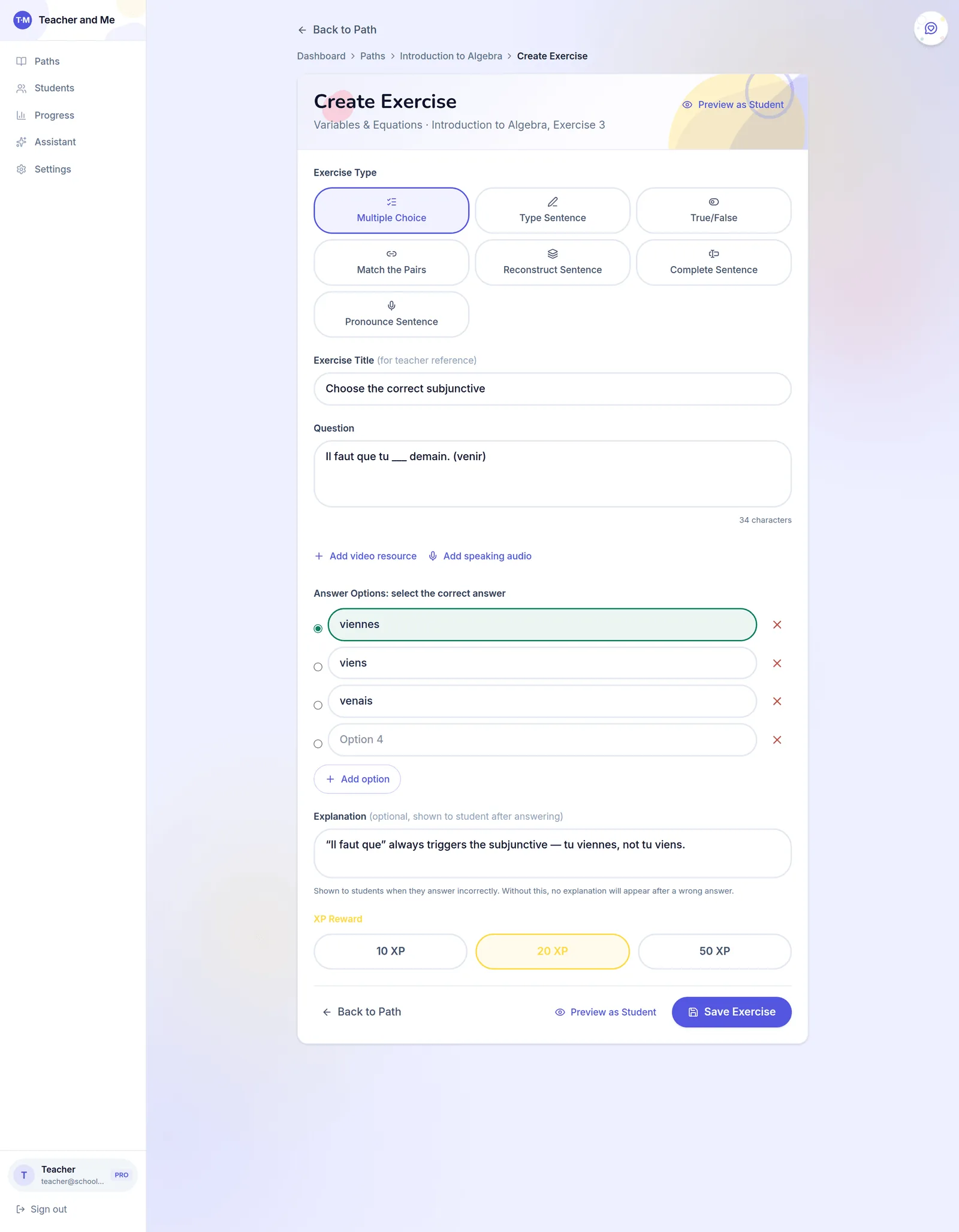
Create Exercise form showing the seven exercise types, a French subjunctive question 'Il faut que tu ___ demain (venir)', answer options with the correct one marked in green, an explanation shown after wrong answers, and 10/20/50 XP reward buttons
The exercise builder: type, question, options with the correct answer marked, an explanation for wrong attempts, and XP weighting — one screen, about a minute per exercise.

You can also attach a YouTube video or a speaking-audio clip to any exercise, and preview it as a student before saving. That variety is enough to check real understanding rather than recognition.

See what actually happened between sessions

This is the part worksheets can't do. Your student roster shows who's active and who's drifting:
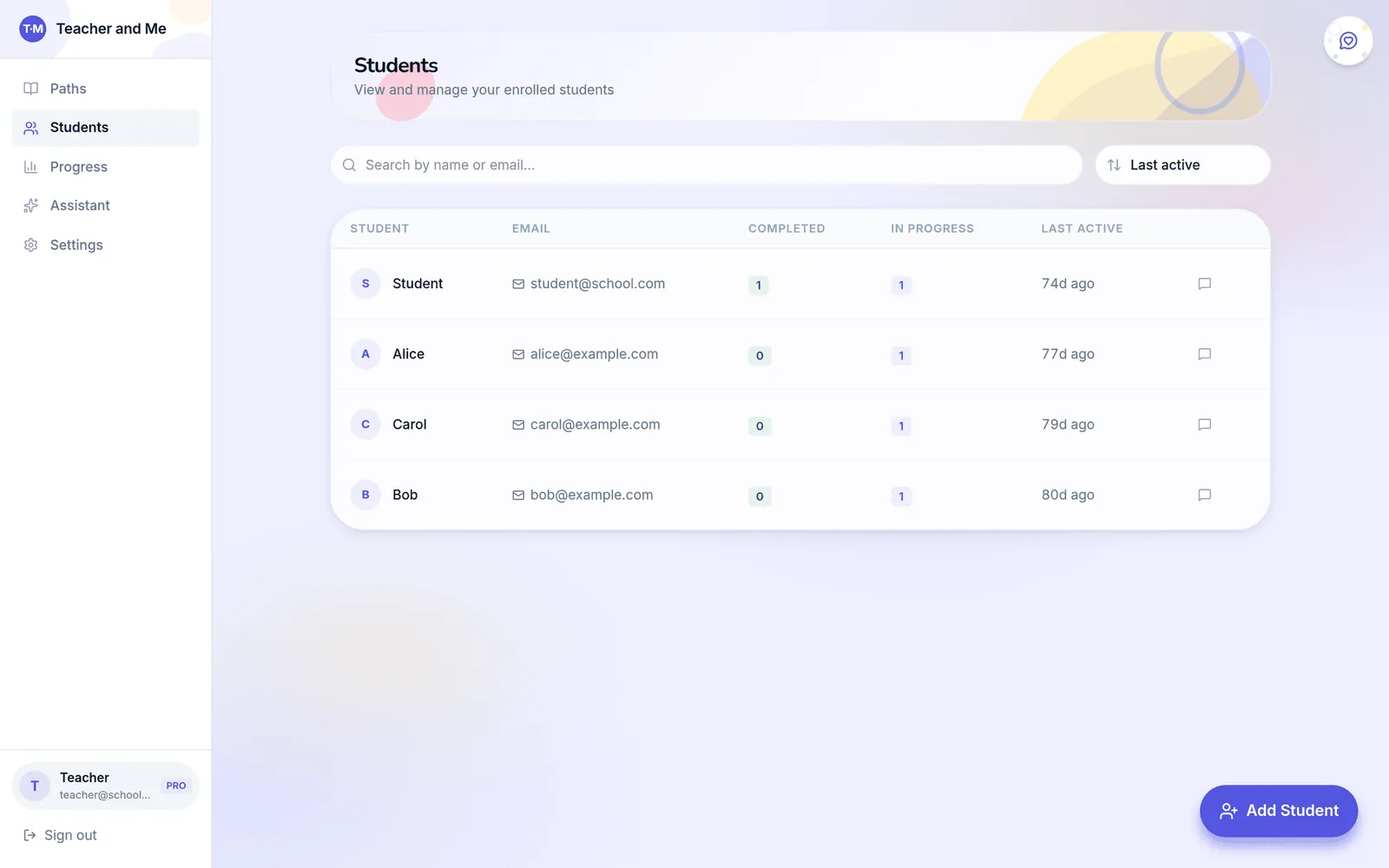
Students table showing each student's email, completed and in-progress paths, and last-active time, with an Add Student button
The roster: completion, work in progress and last activity for every student.

And the progress overview turns their practice into something you can act on: completion by path, active students over the week, per-path performance and a feed of recent activity.
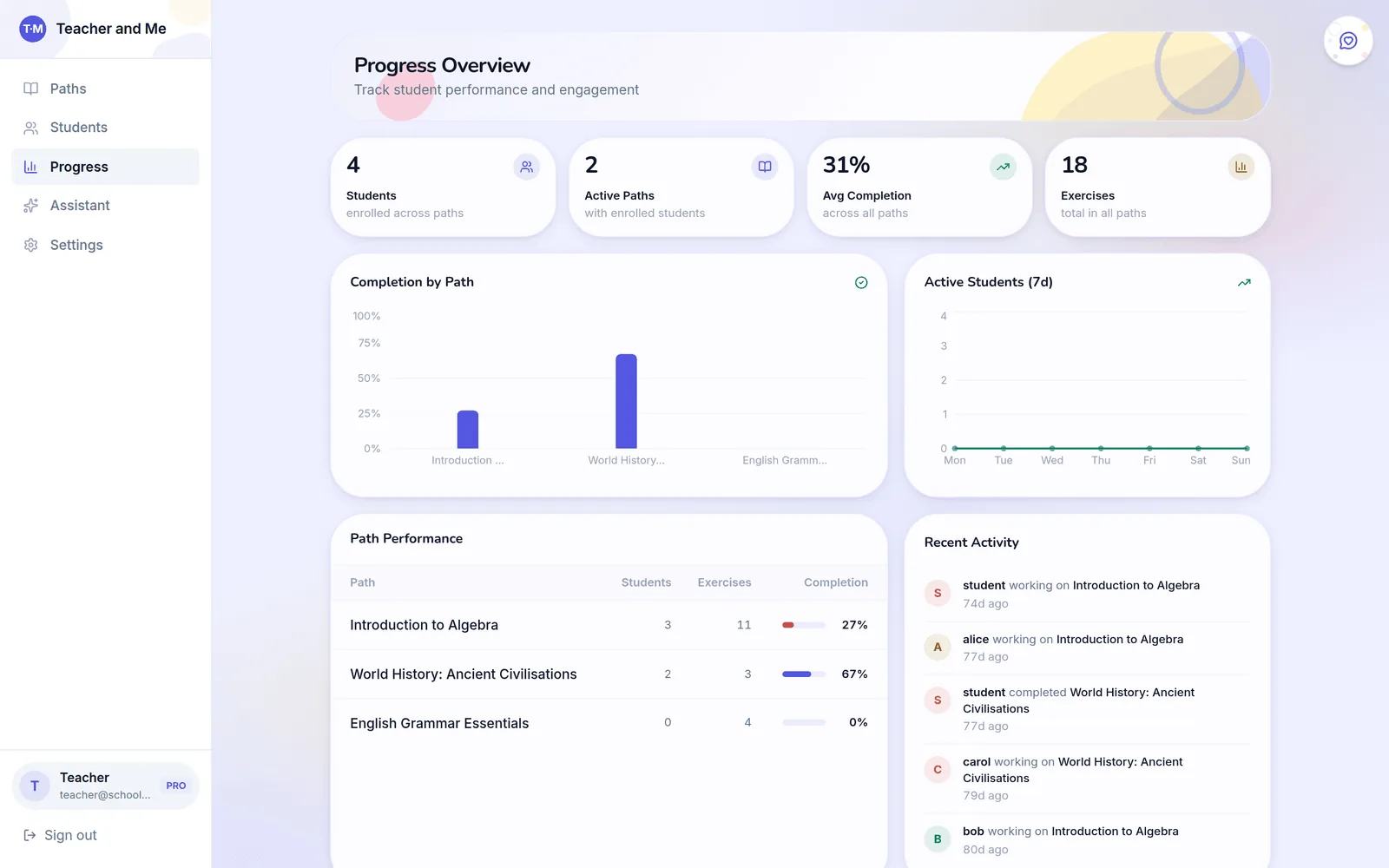
Progress overview dashboard with stat cards for students, active paths, average completion and exercises, a completion-by-path bar chart, an active-students line chart, a path performance table and a recent activity feed
The analytics view: enough to prepare your next lesson in two minutes, not twenty.

Every path also has its own progress page — per-path completion, XP and an individual list showing exactly how far each student got and when they last worked:
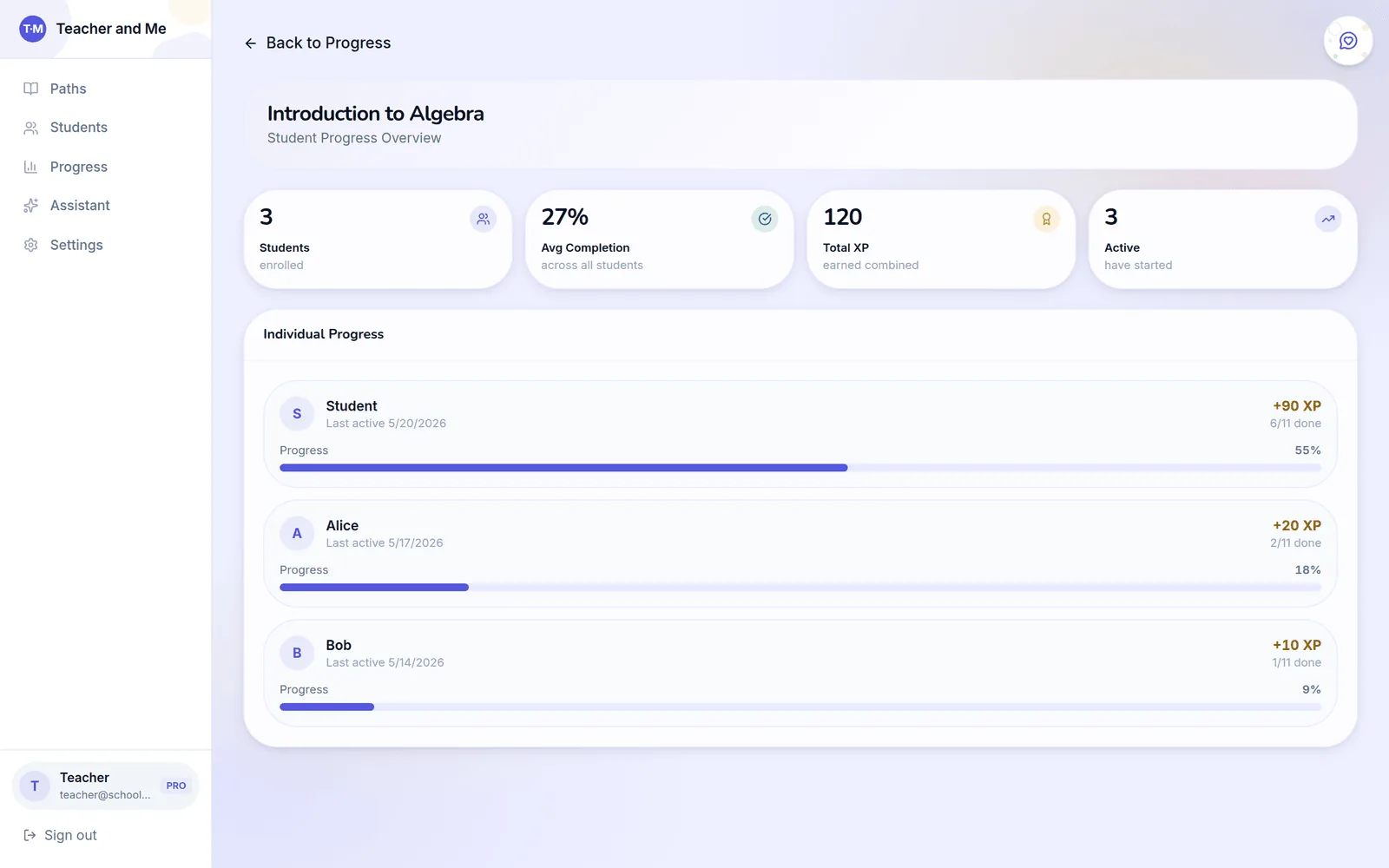
Per-path progress page for 'Introduction to Algebra' with KPI cards for enrolled students, average completion, total XP and active students, and an individual progress list showing each student's percentage, exercises done and last-active date
One path, every student: who's at 55%, who's at 9%, and when they last practised.

And when one student is your focus — say, before their session tomorrow — their profile goes down to the exercise level. The Analytics tab charts their score over time against the class average, time spent per exercise versus the class, and retry rates by path:
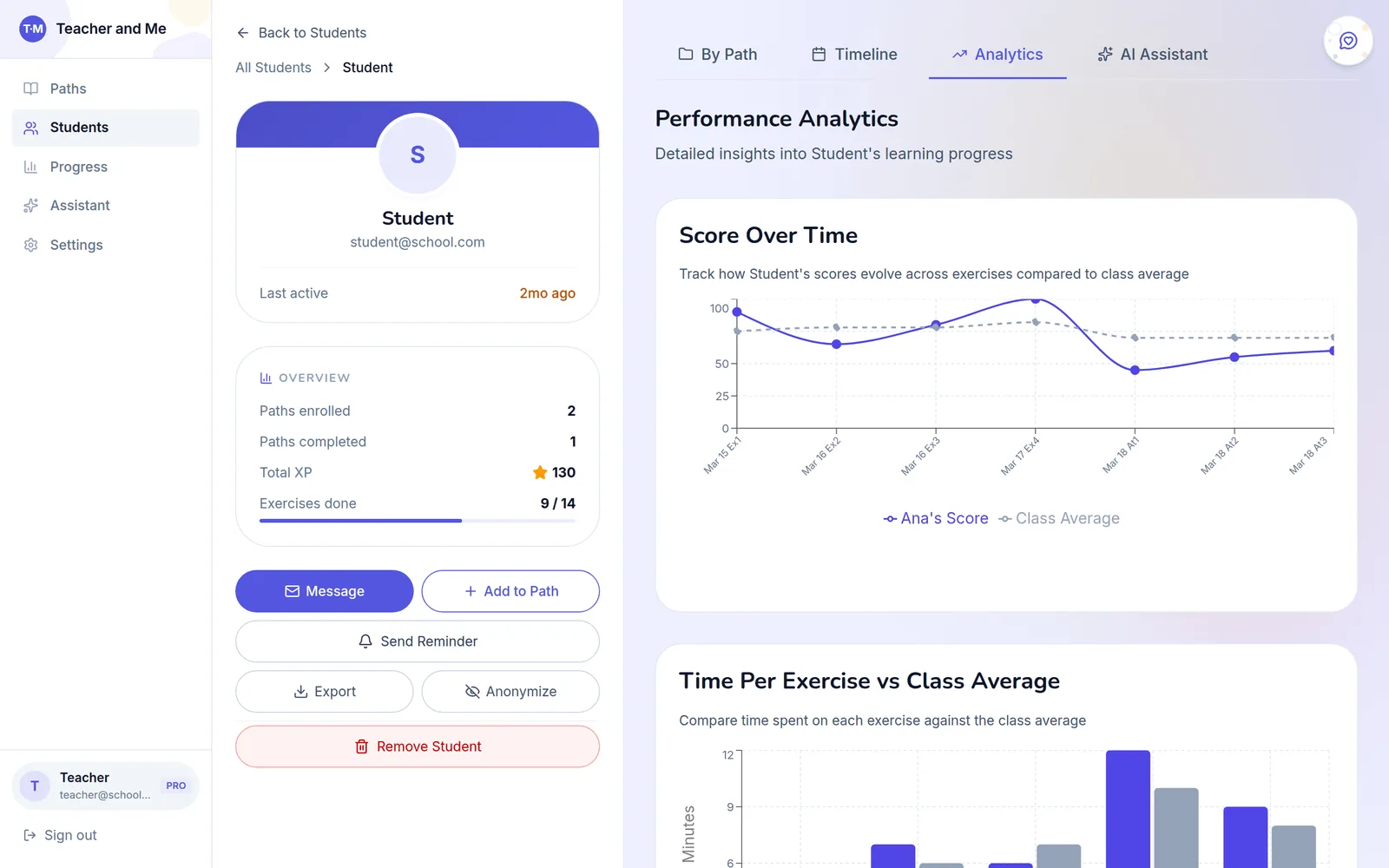
Student profile with Performance Analytics tab open: a Score Over Time line chart compared to class average, a Time Per Exercise vs Class Average bar chart, and an overview card with paths enrolled, total XP, exercises done and Message, Add to Path, Send Reminder, Export and Anonymize actions
Per-student analytics: score trend vs the class, time per exercise, retries — the "where are they stuck?" answer, charted.

Before a session, that means you open one screen and know: who practised, what they retried, which exercise tripped them up, and whether it took them two minutes or twelve. The re-diagnosis that usually eats the first fifteen minutes of a lesson is already done.

An AI assistant that knows your data

The built-in assistant answers questions about your students and your paths — strengths and weaknesses of one student, class-level trouble spots in a path, and AI-assisted path edits.
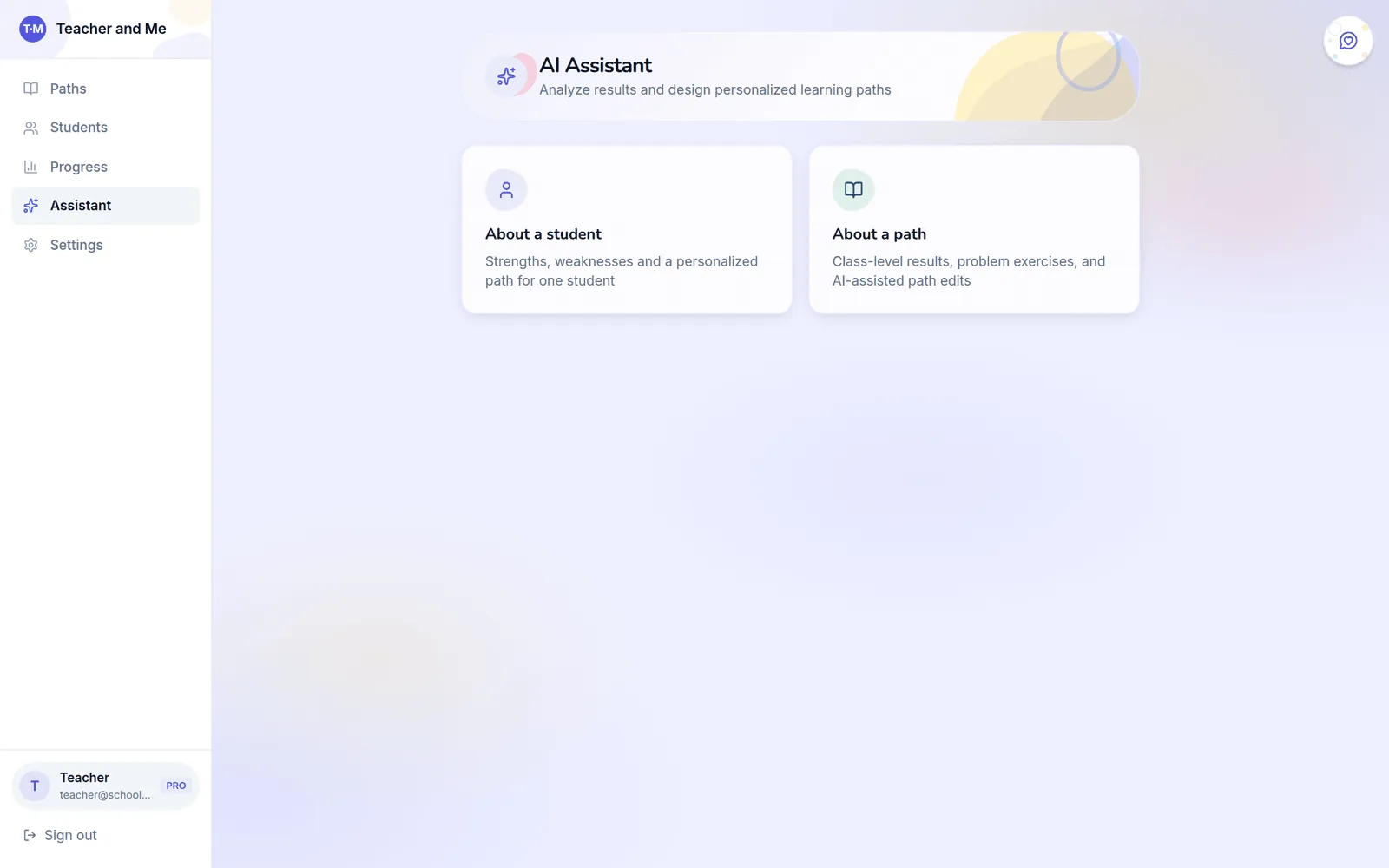
AI Assistant screen with two entry points: 'About a student' for strengths, weaknesses and a personalized path, and 'About a path' for class-level results and AI-assisted path edits
Two questions the assistant answers: “how is this student really doing?” and “where does this path lose people?”

The student side: practice that doesn't feel like homework

Your students see none of the dashboards above. Their home screen is a friendly list of assigned paths with progress bars and XP:
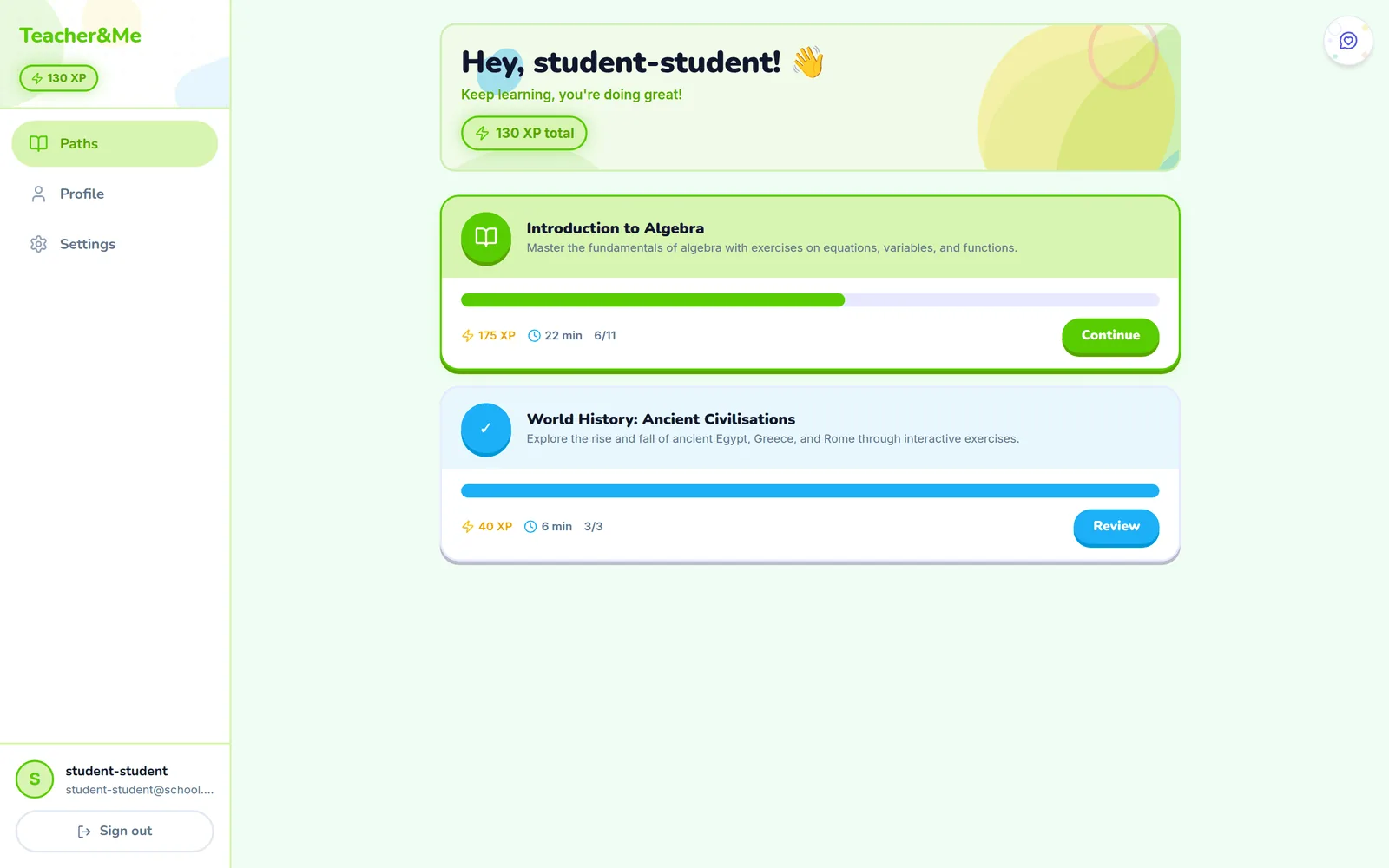
Student home screen greeting the student with total XP, and two path cards showing progress bars, XP, estimated time and Continue and Review buttons
The student home: assigned paths, progress, and one obvious button — Continue.

Each path unfolds as a visual journey — completed lessons behind you, the current one marked “you are here”:
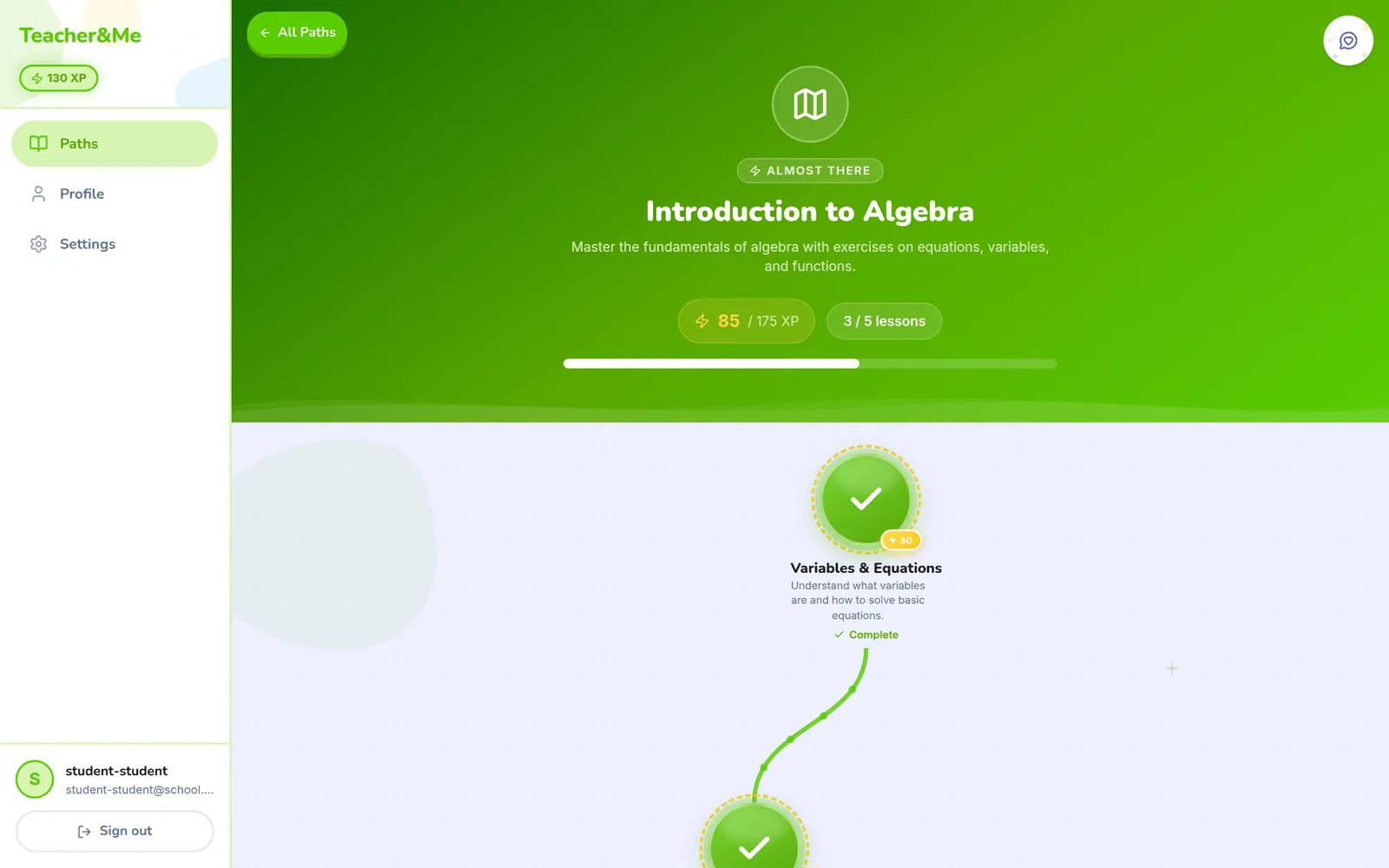
Gamified path map for a learning path showing XP earned, lessons completed, and a winding trail of lesson nodes with checkmarks and the current position
The path map: progress you can see. Students know exactly where they are and what's next.

Inside an exercise, feedback is instant — right answers celebrate, wrong answers show the correction and move on. XP accumulates, streaks build, and progress saves automatically after every answer:
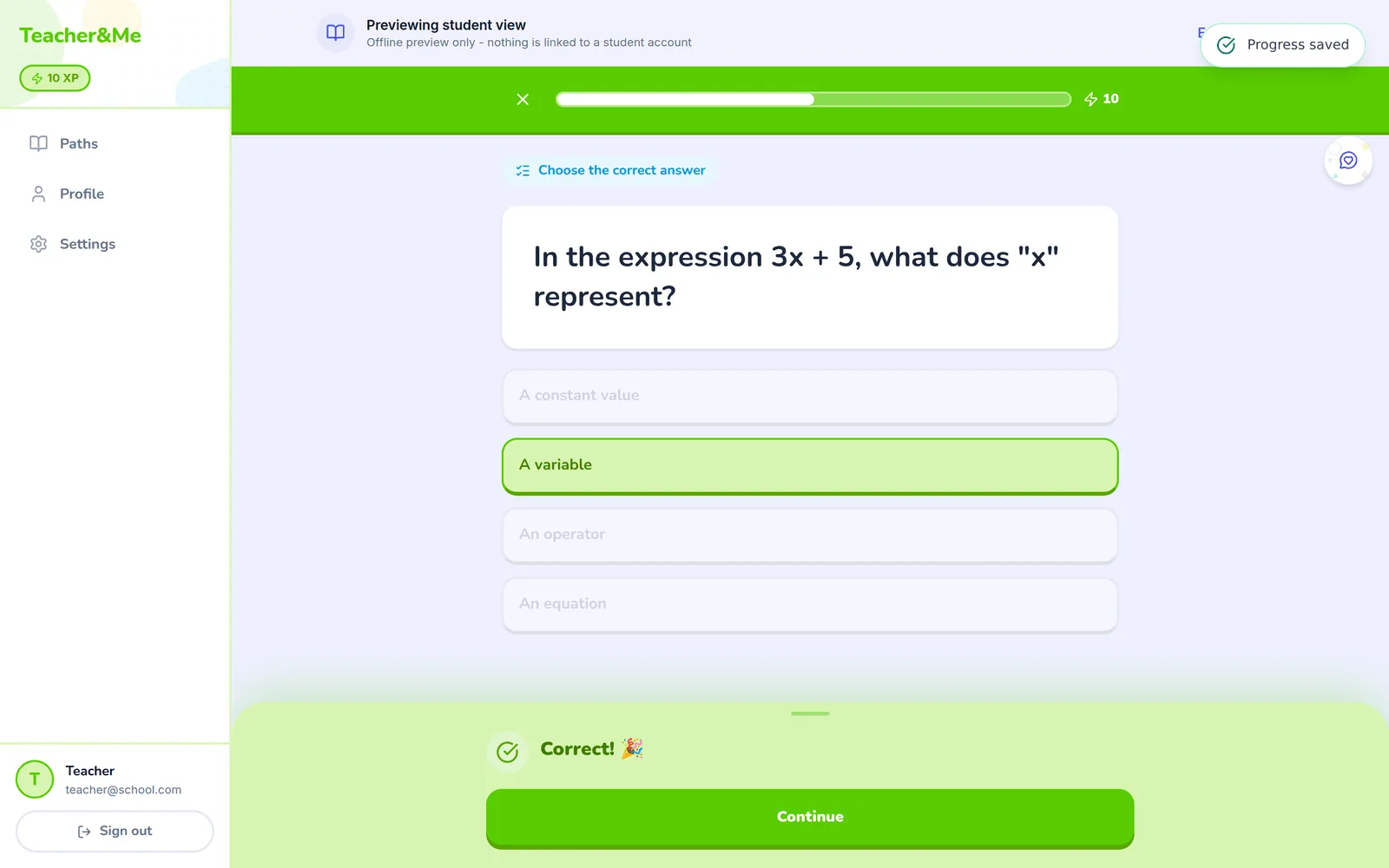
Exercise runner showing a multiple-choice question answered correctly, with a green 'Correct!' feedback panel, a progress bar, XP counter and a 'Progress saved' toast
The exercise runner: answer, instant feedback, next. Every attempt is recorded for the tutor.

Students also get a profile with weekly activity against a goal, totals, and exam-goal tracking — their own reason to come back tomorrow:
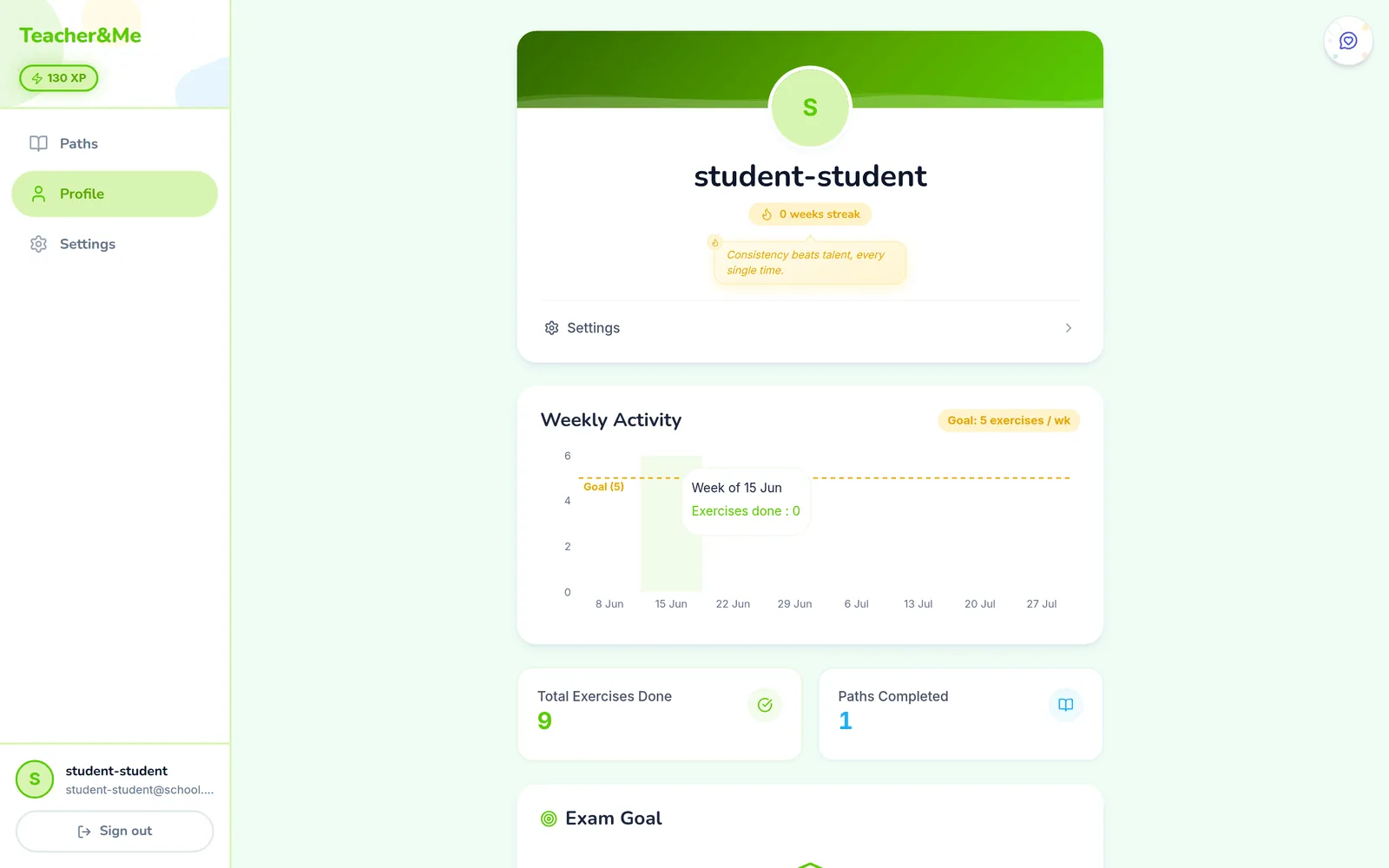
Student profile page showing streak, a weekly activity chart against a goal of 5 exercises per week, total exercises done, paths completed, and an exam goal section
The student profile: streaks, weekly goals and totals — light gamification, aimed at adults.

Getting started takes a minute

Sign-in is passwordless: pick your role, enter your email, type the 6-digit code — or use Google. Students join the same way, from an invitation you send inside the path editor.
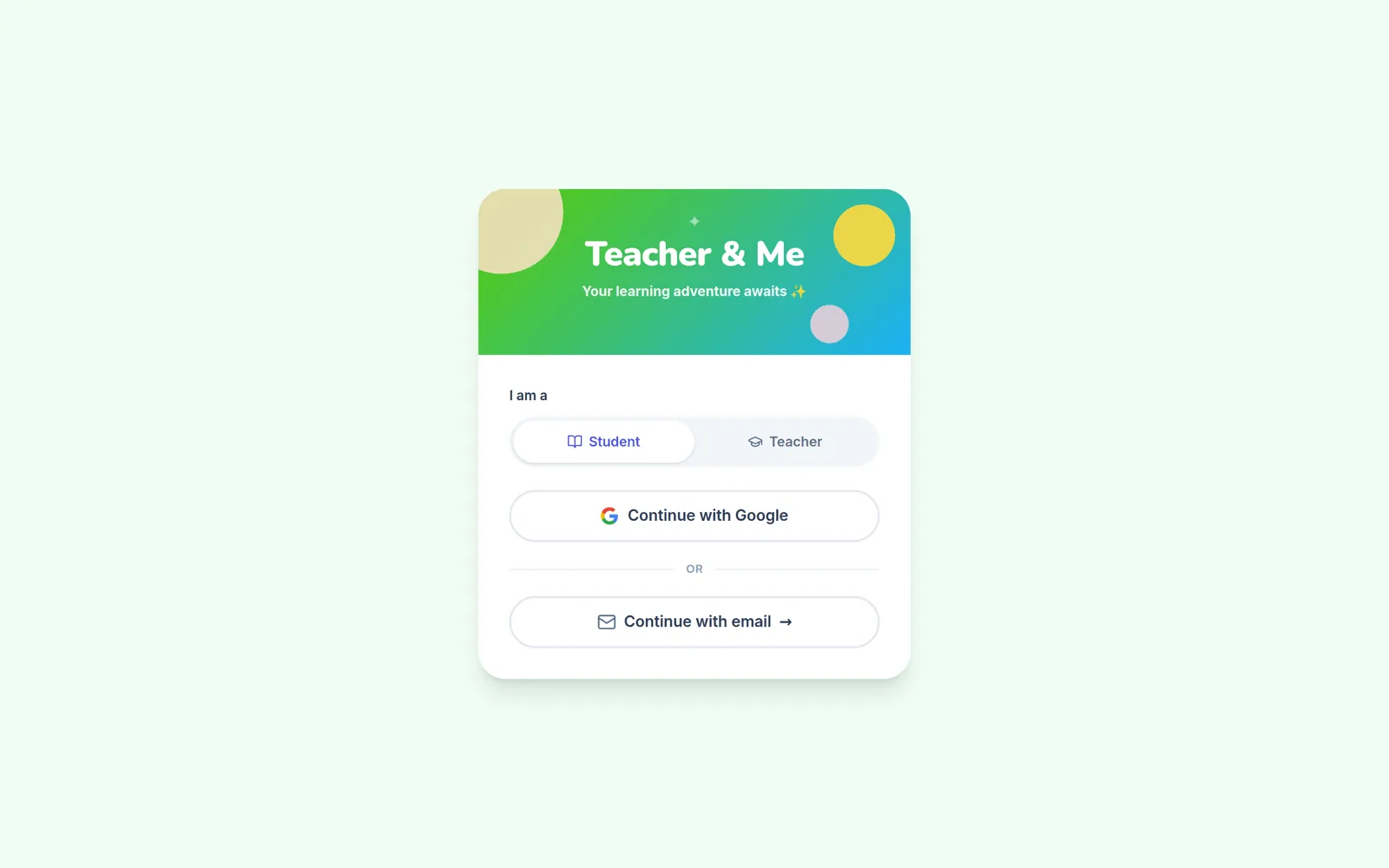
Sign-in screen with a Student/Teacher role toggle, a Continue with Google button and a passwordless Continue with email option
One screen, no password. Teachers and students choose their role and are in.

A few things you don't see in screenshots but would notice in week one:

  • Works offline. Teacher and Me is an installable web app; students can practise on the train and their progress syncs when they're back online.
  • Accessible by design. The interface targets WCAG AA: real focus states, screen-reader-friendly structure, and reduced-motion support throughout.
  • Privacy-first. No ad trackers, and student data exists to serve exactly one relationship: yours.

Who it's for

Teacher and Me is built for independent language tutors — one-to-one or small groups — and their adult or teenage students. If your current between-session workflow is “I email a PDF and hope”, this replaces it with something students actually finish, and with evidence you can teach from.

Frequently asked questions

Is Teacher and Me free to try?

Yes. You can sign in and build your first learning path without a credit card. Sign-in is passwordless — a 6-digit email code or your Google account — so trying it takes about a minute.

Do my students need to install anything?

No. Students open their paths in any browser, on any device. Teacher and Me is also an installable web app (PWA), so students who want an app-like experience can add it to their home screen — practice even works offline and syncs back when they reconnect.

What kinds of exercises can I create?

Multiple choice, true/false, fill-in-the-blank and sentence typing, sentence reconstruction, matching pairs, and pronunciation exercises — each with its own XP reward, so you can weight harder exercises more heavily.

How is this different from sending worksheets or using a generic LMS?

Worksheets tell you nothing about how students worked; a corporate LMS buries a one-to-one relationship under administrative features. Teacher and Me is built for the tutor–student pair: you see every answer, retry and time-on-task per exercise, and your students get a motivating, game-like practice experience rather than a form to fill in.